
Take the “Cyber” Out of “Cybersecurity”
By: Paul LaPorte, Cybersecurity Coordinator
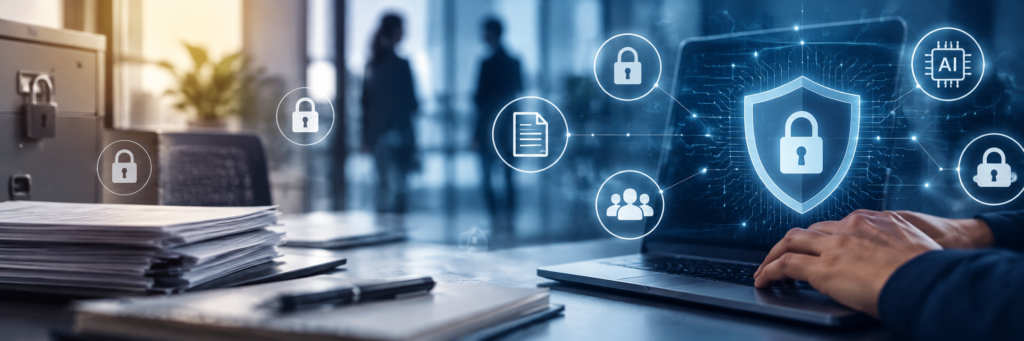
One of the misconceptions about Cybersecurity is that it exists purely in the digital space. The reality is that attacks can come at you just as easily in the physical world. If a bad actor wants your information, they may not need to access it virtually. If they can steal it off a desk, from a filing cabinet, or out of the dumpster, they’ll happily do so! In some cases, stealing the information isn’t the goal, disruption is. In that case, physical destruction of your resources is a very effective means of attack! When looking at the information you’re trying to protect and who has access to it, be sure to consider things like building access, whether or not that information can be printed, and where the information is being held when the office or your home is empty.
Live by the rules of “Least Privilege”
One of the most important concepts we adhere to in the cybersecurity world is the concept of “Least privilege.” This concept simply states that your critical and sensitive information should only be accessible by those who are required to view it as part of their duties. Fewer people accessing your information means fewer ways that access can be exploited. Take a look at the information you have, along with the people who can currently access it and ask yourself, “Does everyone on this list need access to this information?” Not only does this minimize the “target” that an attacker has to get access to that info, but it also makes it much easier to figure out who was compromised if there was an issue.
Treat AI as an acquaintance, not a confidant
Artificial intelligence tools are making life easier in many ways for both businesses and general users alike. But with any increase in convenience, there’s always a trade-off when it comes to security. Make sure that you are only sharing information with AI tools and agents that you wouldn’t mind being released to the public. Avoid sharing sensitive things such as banking information, social security numbers, driver’s license information, or the information of personal contacts. This is especially true when it comes to using free and public models. It’s possible for that information to be retrieved by another user, and AI organizations are focused heavily on expansion rather than safety, so keep that in mind when deciding on that information you share with that chat bot.
No service or device can keep you entirely safe. Your cybersecurity is your own responsibility
Many people in the business and home spaces alike assume that in order to protect your information, you need to shell out hundreds, if not thousands of dollars, in order to keep yourself safe. While there are many helpful services that can assist you in protecting your information, it is incredibly important that you and your employees understand what information you’re trying to protect. You should know where to store it safely (and where it shouldn’t be stored) and who, both inside and outside of the company, that information can be shared with. There is nothing in the world you can buy that will protect information that is handled in an unsecure manner, so the buck stops with you! If you understand this concept, then you’ll be able to understand how to find ways to protect your information without breaking the bank.
If you have questions or would like more information, don’t hesitate to reach out via email at [email protected].
Posted in Cybersecutiy